Our Match With JavaScript And TypeScript
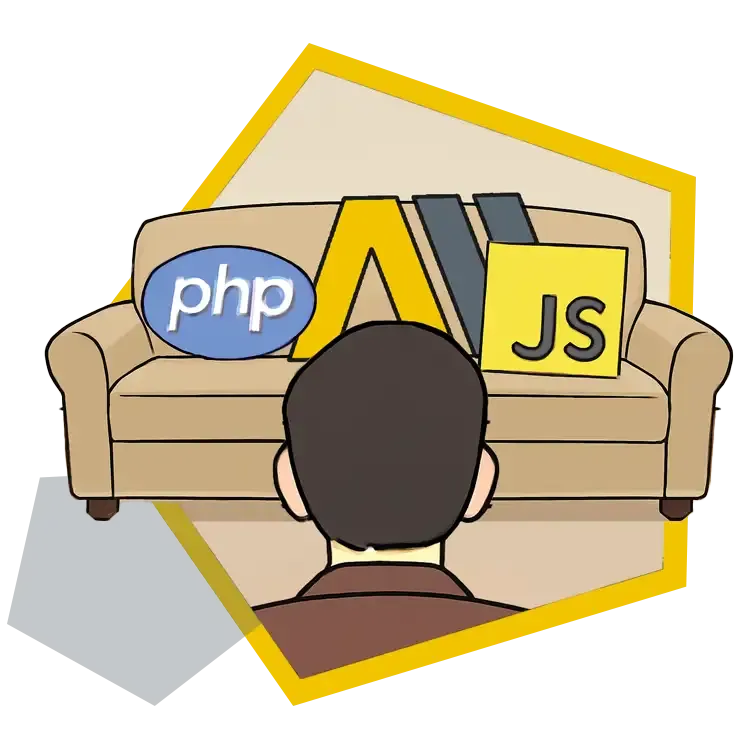
Web development has undergone profound changes in recent years. Where PHP-based systems and monolithic architectures once dominated the internet, companies now rightly expect flexible platforms, high performance, and a modern user experience.
Why is that? Because it simply works! At the AM GmbH, we have been consciously relying on a modern JavaScript and TypeScript stack for years. Sometimes we are asked: "Sorry, but why?" Let's talk about that and get to the bottom of this question, instead of leaving you in the dark.
Looking Back: The Classic PHP Approach
Even up-to-date online systems are still based on traditional PHP structures. This classic, monolithic architecture combines backend, frontend and databases into a fixed block. Looking back, this was sufficient for simple websites for a long time, but modern digital platforms today place completely different demands on web development.
The monolithic approach inevitably brings structural disadvantages: changes have a direct impact on the entire system, and maintenance costs increase with each new feature. In addition, technical flexibility in development is severely limited. When we think of dynamic online portals or even web apps, the classic PHP approach simply lacks the necessary agility.
Looking Ahead: API-first And Headless Architectures
At the AM GmbH, our development teams switched to decoupled, API-first architectures years ago. By using a modern Headless CMS such as Strapi and highly flexible front-end frameworks such as React and Next.js, we consistently separate content, logic and display methods from one another.
This separation creates freedom: content is always available centrally and can be displayed via any frontend. It doesn't matter whether our customers want to display the content on a website, in a web app, through a web portal or in a mobile application (PWA/native app).
The frontend and backend can be developed independently of each other without one side slowing down the other. Try that with PHP. Our forward-looking approach means we make projects more flexible, accumulate less technical debt and deliver significantly better expandability for the future.
Modern User Expectations Require Performance
Today's users expect loading times in the millisecond range and interactive behaviour similar to that of a native app. If you're thinking about SEO, yes, Google expects this too! Looking back briefly, classic PHP pages re-render content with every click. This is a time-consuming approach that no longer meets today's performance requirements and user expectations.
How can internet performance be improved today? The JavaScript framework Next.js offers a combination of server-side rendering, static generation and client-side interactivity. Put simply, this means that we can achieve values that were previously only possible with highly specialised systems.
This not only has a positive effect on the user experience, but is also a major factor in technical search engine optimisation. What's more, your marketing team will also be delighted because conversion rates are better thanks to faster loading times.
Looking Ahead: Online Ecosystems With TypeScript
While PHP has historically been entrenched and has only been modernised slowly, the modern JavaScript ecosystem has developed rapidly in parallel. TypeScript in particular provides us with a tool in web development that makes large code bases stable and maintainable. Why? Typing prevents errors, improves collaboration within our teams and thus creates a solid foundation for long-term projects.
This is not just a trend: With TypeScript as a modern online ecosystem, we are relying on a stack that is not only up to date today, but is also visibly evolving. This is an important factor when customers look ahead and invest in sustainable digital platforms.
Content Management Solutions Without CMS Monoliths
Many PHP-based content management systems, such as Typo3 or WordPress, are firmly linked to the front end. What users do not see leads to typical challenges in development: plugins that are difficult to maintain, security vulnerabilities that need to be addressed, increasing update problems and limited flexibility in designing new front ends.
A Headless CMS such as Strapi overcomes these limitations of monolithic CMSs. Content becomes more structured, is provided independently and can therefore be played out in any channel. For our customers, this means finally having real content management solutions that are no longer limited but can be flexibly expanded. With our in-house frontend solution, you experience intuitive content management paired with technical flexibility.
More about: The AM PageBuilder
Security & Operations Management In The Cloud Era
PHP systems are often hosted in the traditional way: a server with manual updates and manual backups; plugins come from third-party providers. This increases risks and causes high operating costs in the long term.
In contrast, our projects have been based for years on modern deployment strategies, automated build pipelines and cloud era hosting platforms, such as container environments or Kubernetes clusters. This makes operations management more stable and efficient at the same time. More specifically, you benefit from:
- Automated updates
- Higher data security
- Zero downtime deployments
- Flexible scaling for growing access numbers
Thanks PHP, But We Match Better With JS Tech Stack
The classic PHP approach had its merits. It shaped and expanded the web. For simple websites without any data management or expandability requirements, PHP-based CMSs are still an option today.
So it's only right to say thank you – the internet would be much poorer without PHP! But for the kind of digital solutions our customers need (portals, platforms, intranets, web apps, etc.), PHP wasn't enough for a long-term relationship. We've long since settled on the JS tech stack. Admittedly, we ran both in parallel for a while, but we wanted to be sure, of course!
To summarize again, what led us to the JavaScript/TypeScript-based stack:
- Modern architecture with high security
- Outstanding performance and strong scalability
- Flexible further development for long-lasting solutions
- Customized updates and better automation
In short: The JS tech stack is the foundation for digital products that are future-proof.
Your Contact
Carsten Köhler
Product Owner
I support your company with web-based solutions that not only impress today, but also grow with you in long term. The modern JS tech stack provides the perfect basis for this. This is precisely why the AM GmbH relies on it for web developent.